


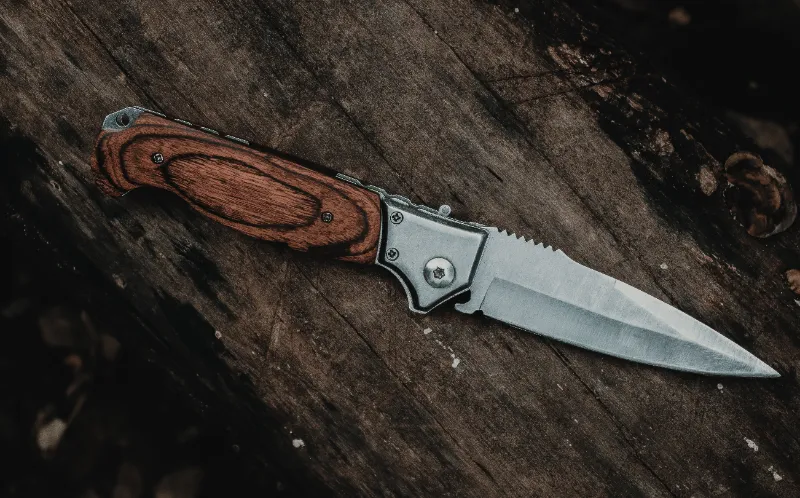
Were you recently charged with a weapons offense? Knives are a popular means of self-defense, and perhaps you thought the knife you were carrying was legal but are facing a weapons charge. Or you are simply trying to educate yourself on Minnesota knife laws, including the different types of knives and their legality in the state. No matter your reason, you came to the right place.
In this article, the Minnesota criminal defense lawyers at Arechigo & Stokka go over the details of knife laws in MN.
If you have any additional questions, please contact us today.
Key Takeaways
- Most knives are legal to own and carry in Minnesota, including pocket, folding, hunting, and utility knives, as long as they aren’t used unlawfully.
- Automatic knives (switchblades) are prohibited under Minnesota’s dangerous weapons law and can lead to misdemeanor or gross misdemeanor charges if possessed.
- Carrying a knife with intent to harm or in restricted locations (like schools, courthouses, or certain public buildings) can result in serious criminal penalties.
- Local ordinances matter: Some cities or counties may have additional restrictions on blade length or carry practices, so it’s important to check local rules too.
MN Knife Laws
Weapons and knife laws vary widely among states and often change drastically within different locations within a state (e.g., cities and metropolitan areas).
It’s always important to familiarize yourself with the local laws before you carry a knife.
In Minnesota, the knife laws are relatively straightforward and uniform across the state.
Minnesota’s dangerous weapons statute governs knife laws and prohibits the manufacture, transfer, or possession of a “switchblade knife opening automatically.”
While this statute applies across the state, be aware that cities may adopt their own regulations. You will want to check local city guidelines.
See what our clients have to say about our services:
In Minnesota, the ownership of most knives is unrestricted, except for switchblades. However, carrying knives is subject to restrictions. You can carry a knife openly or concealed, but it is illegal to carry a knife designed as a weapon with the intent to harm others.
In Minnesota, knife laws allow for the carrying of knives of any length. However, it’s essential to note that certain restrictions may apply, especially regarding the intent of use. While the law generally permits carrying knives for utility purposes, any demonstration of intent to harm with a knife could lead to legal consequences. Therefore, individuals should familiarize themselves with the specific statutes and regulations governing knife possession and usage in Minnesota.
Are Automatic Knives Legal in Minnesota?
In Minnesota, it is not legal to possess an automatic knife. Switchblades are the only knives explicitly illegal to possess in Minnesota.
It is crucial to understand what a switchblade knife is in the first place to know if what you have is unlawful.
Switchblade knives have a blade that opens automatically-by hand pressure applied to a button or other device.
Is there a knife blade length limit in Minnesota?
No. Minnesota state law does not set a maximum blade length for owning or carrying a knife. Cities and counties can pass their own stricter rules, though. Before carrying a longer blade, check the local ordinance where you live, work, or travel, especially in Minneapolis and St. Paul.
Are gravity knives legal in Minnesota?
In Minnesota, there are specific locations where carrying or using gravity knives is restricted. These restricted areas often include schools, government buildings, public transportation, and other designated places. It is important to be aware of and comply with these restrictions to avoid any legal issues.
Are Spring Assisted Knives Legal in Minnesota?
A spring-assisted knife, otherwise known as a spring-loaded knife, is a folding knife that has been tailored with an internal spring mechanism to open the blade.
It is quicker and simpler to open than a manual folding pocket knife, but it is not automatic and, therefore, legal in Minnesota. Spring-assisted knives are legal in most places.
Are OTF Knives Legal in Minnesota?
An OTF knife means “out of the front.” OTFs are automatic knives with blades sheathed within the handle.
They differ from switchblades and spring-assisted knives in one significant way: the blade comes out of the top.
OTFs are considered switchblades because the blade deploys automatically, which is illegal in Minnesota.
Are Butterfly Knives Illegal in Minnesota?
In Minnesota, it is generally legal to own a butterfly knife (also known as a balisong), but switchblades are prohibited. However, there are restrictions when carrying knives outside the home. Minnesota law allows carrying knives of any length, but local regulations may impose additional rules.
Penalties for Illegal Possession
In Minnesota, the possession of most knives is permissible; however, being found with a switchblade can result in substantial repercussions.
The penalties for illegal knife possession can vary based on the law you violated, but in most cases, possessing a dangerous weapon will result in misdemeanor or gross misdemeanor charges.
A misdemeanor conviction is punishable by up to 90 days in jail and up to a $1,000 fine.
The offense becomes a gross misdemeanor if you illegally possess a switchblade in a public housing zone, school zone, or public park.
A gross misdemeanor conviction is punishable by up to a year in jail and a fine of up to $3,000.
Note that in many knife-related cases, charges don’t come from the item itself—but from how it was discovered during a police encounter. If officers searched you or your belongings, it’s important to understand whether that search without a warrant was lawful.
Minnesota knife laws may not be as restrictive as other states, but a conviction will, without a doubt, negatively impact your life. If you are charged with a knife offense, contact a lawyer immediately.
Consult with a Criminal Defense Attorney Today Regarding Minnesota Knife Laws
At Arechigo & Stokka, we have decades of experience with hundreds of cases under our belt.
Facing any weapons charges can have a devastating impact on your life, including knife charges. If you were caught with an illegal knife in Minnesota, you need experienced representation.
Contact our criminal defense lawyers today to schedule a free consultation.
FAQ
Many knives are legal to own and carry in Minnesota, but legality depends on the type of knife, how it is carried, and the circumstances. Certain knives and methods of carry can lead to criminal charges.
Minnesota knife laws restrict certain weapons classified as dangerous or designed primarily for harm. Whether a knife is illegal often depends on blade type, length, and intended use.
Carrying a knife in public may be legal in Minnesota, but restrictions can apply in certain locations or situations. Schools, government buildings, and other sensitive areas often have stricter rules.
Concealed carry of a knife can raise legal issues under Minnesota law. Whether it is allowed depends on the knife involved and whether it is considered a dangerous weapon.
Yes. Under Minnesota knife laws, a person may face charges based on possession alone, especially if the knife is restricted or carried in a prohibited manner.
A knife-related weapons charge can result in criminal penalties, including fines or jail time. The outcome depends on the facts of the case, the knife involved, and any prior history.
Claiming self-defense does not automatically make knife possession legal. Minnesota law looks closely at whether the knife was lawfully carried and whether the use or possession was reasonable.
Yes. Prior criminal history can impact how a knife-related charge is handled in Minnesota and may increase potential penalties or restrictions.
If law enforcement questions you about a knife, it is important to remain calm and avoid making statements that could be used against you. Speaking with a lawyer can help protect your rights.
Yes. A Minnesota criminal defense lawyer can explain how state knife laws apply to your situation and help you respond to or defend against a knife-related weapons charge.
Where You Can Find Our St. Paul Office